For hotels, restaurants, bars, salons, and beauty businesses, online reviews are everything. A single bad rating on Google Maps can directly affect bookings, walk-ins, and revenue, so it's vital to know how to respond appropriately. Most customers check reviews before deciding where to eat, stay, or book an appointment.
That is why understanding how should you respond to negative reviews regarding a bad rating? is not optional. It is a core part of running a successful local business.
Handled well, a negative review can build trust and improve customer satisfaction. Handled poorly, a negative review response can cost you dozens of future customers.
Why Bad Ratings Matter for Local Businesses
People choosing a hotel, restaurant, or salon are not only looking at star ratings. They read the comments and, more importantly, the business responses.
Customers want to see a thoughtful review response:
- Does the business care?
- Is the owner or manager present?
- Are problems taken seriously?
- Does the business owner communicate respectfully in their review response?
In many cases, a thoughtful response to a bad review can outweigh the negative rating itself.
Why Customers Leave Negative Reviews
In hospitality and beauty services, negative reviews usually come from:
- Long waiting times
- Unfriendly staff interactions that severely impact customer experience
- Unmet expectations
- Cleanliness issues
- Pricing misunderstandings
- Feeling ignored during a negative experience
Often, the problem is not the mistake itself, but the lack of response or resolution.
How Should You React on a Bad Rating
Respond Fast, But Stay Calm
Quick responses to customer reviews show that you are active and care about feedback, which is essential for maintaining a positive online reputation. However, never reply emotionally, even if the review feels unfair.
Take a moment, read the review carefully, and respond professionally to learn how to respond effectively.
Acknowledge the Experience First
You do not need to admit fault to show empathy. Acknowledging the experience lowers tension and shows respect.
Examples that work well:
- Thank you for your feedback
- We are sorry to hear about your bad experience and appreciate your feedback
- We appreciate you taking the time to share this with us
This alone already improves how future customers perceive your business.
Address the Issue Briefly and Clearly
Do not write long explanations or defensive messages. Keep it simple and focused to effectively deal with negative reviews.
For example:
We are sorry that your visit did not meet expectations. This is not the experience we aim to provide, and we would like to understand what happened.
This shows responsibility without arguing publicly.
Take the Conversation Offline
Public review platforms are not the place to resolve details, but they are important for responding to a bad review and managing your online reputation. Invite the customer to contact you directly.
Please reach out to us directly so we can learn more about your experience and make things right.
This protects your reputation and gives you space to resolve the issue properly.
Examples by Business Type
Hotels
Guests often complain about cleanliness, noise, or check-in issues.
- Apologize for the inconvenience
- Explain feedback is taken seriously
- Invite direct contact
Restaurants & Bars
Common issues include service speed, food quality, or staff attitude.
- Thank the guest for visiting
- Acknowledge the disappointment
- Share feedback with the team
Beauty Studios
Clients leave reviews when results don't match expectations.
- Show empathy
- Don't question the experience
- Offer a follow-up privately
The Hidden Problem With Public Reviews
Many customers leave negative reviews because they feel there is no private way to complain.
If the only feedback channel is Google Reviews, frustration goes straight into public ratings, where it hurts your business the most.
This is where most local businesses lose control of their online reputation.
How RateResolver Helps Local Businesses
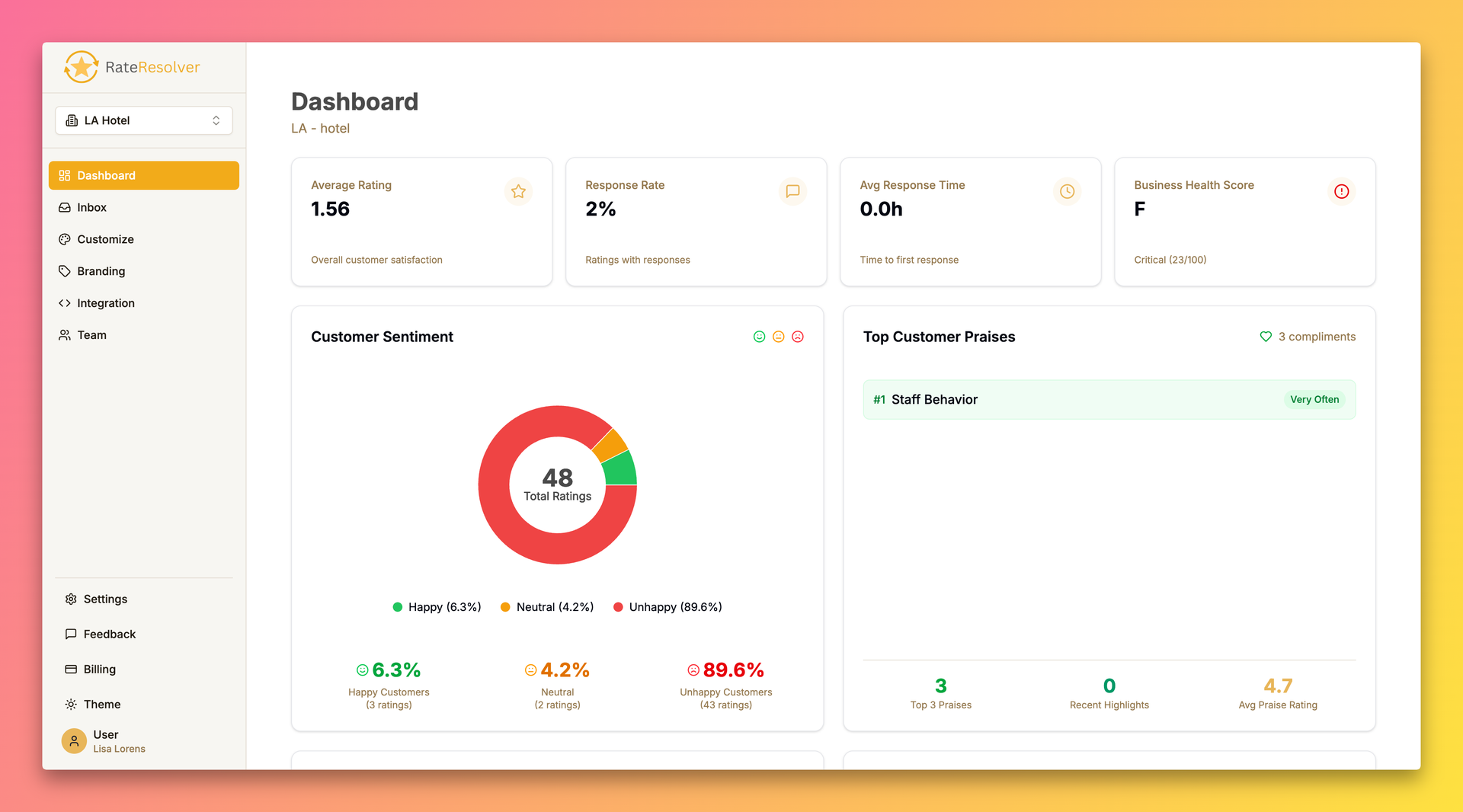
RateResolver helps hotels, restaurants, bars, and salons understand what customers love and where the issues are — so you can discover hidden issues early and organically decrease bad reviews.
Here’s what we do:
- Collect a quick 1–5 star rating from every customer
- Launch a short AI chat to understand what’s good and what the issues are
- Give you instant alerts when something goes wrong, so you can reach out
- Let every customer leave a public review if they want to
- Show you trends and recurring issues on a dashboard
When you discover what's working and what the issues are, bad reviews organically decrease over time — because you catch issues before they turn into public complaints.
If you're asking how should you react on a bad rating, the smartest answer is to build a system that helps you discover hidden issues early and organically decrease bad reviews.
Turning Negative Feedback Into Improvement
Negative feedback highlights real problems:
- Staff training needs
- Service bottlenecks
- Unclear communication
- Expectation gaps
When this feedback is collected early and structured, it becomes your best tool for improving daily operations — and bad reviews organically decrease as a result.
Best Practices for Review Management
- Respond to every review, good or bad
- Keep a consistent and friendly tone
- Never argue publicly
- Move problem solving to private channels
- Use tools that help you manage reviews at scale
Final Thoughts
Bad ratings will happen. That is normal in hospitality and service businesses.
What separates trusted businesses from ignored ones is how they respond.
If you understand how should you react on a bad rating — and you build a way to understand what's good and what the issues are — bad reviews organically decrease, and your reputation grows on its own.